

The journey from a brilliant idea to a market-ready product is rarely straightforward. It demands careful planning, innovative thinking, and above all, a willingness to test and refine every aspect of the design. Central to this process is the creation of a prototype, which serves as a tangible representation of your concept and allows you to explore its potential, identify flaws, and enhance functionality before committing to full-scale production. By engaging with a prototype early in the development cycle, teams can save time, reduce costs, and ensure that the final product truly meets the needs of its intended users.
Understanding the Fundamental Role of Prototyping in Product Development
Prototyping is far more than simply constructing a model or mock-up of a product. It is a critical phase that bridges the gap between abstract ideas and physical reality. When a team embarks on the creation of a new product, they often start with sketches, digital designs, and discussions about features and functionality. However, these early-stage materials, whilst valuable, cannot fully convey how a product will behave in real-world conditions. A prototype transforms these concepts into something that can be held, examined, and tested, providing invaluable insights that are impossible to glean from drawings alone.
Why Prototypes Serve as the Foundation for Innovation
Innovation thrives on experimentation, and prototypes offer a safe space to explore novel ideas without the financial and logistical burdens of mass production. By creating a working model, designers and engineers can test assumptions, challenge conventional thinking, and push boundaries in ways that theoretical discussions cannot achieve. A prototype encourages creative problem-solving and allows teams to identify potential issues before they become costly errors. Moreover, it fosters collaboration, as stakeholders from different disciplines can interact with the model, share their perspectives, and contribute to the refinement process. This collaborative approach often leads to breakthroughs that would not have emerged through isolated work or purely conceptual analysis.
The Journey from Initial Concept to Tangible Model
The path from an initial idea to a tangible prototype involves multiple stages, each building upon the previous one. In the earliest phase, teams brainstorm and sketch out rough concepts, exploring various approaches to solving a particular problem or meeting a specific need. Once a promising direction is identified, more detailed digital designs are created, often using computer-aided design software to visualise dimensions, materials, and mechanisms. This digital model then serves as the blueprint for constructing a physical prototype. Depending on the complexity of the product, this process may involve several iterations, with each version incorporating lessons learned from previous trials. The goal is to progressively refine the design until it achieves the desired balance of functionality, aesthetics, and user-friendliness.
Modern Manufacturing Techniques: 3D Printing and CNC Machining in Prototype Creation
Advances in manufacturing technology have revolutionised the prototyping process, making it faster, more affordable, and more accessible than ever before. Two techniques in particular have become indispensable in modern product development. These methods enable teams to produce high-quality prototypes with remarkable speed and precision, facilitating rapid experimentation and iteration.
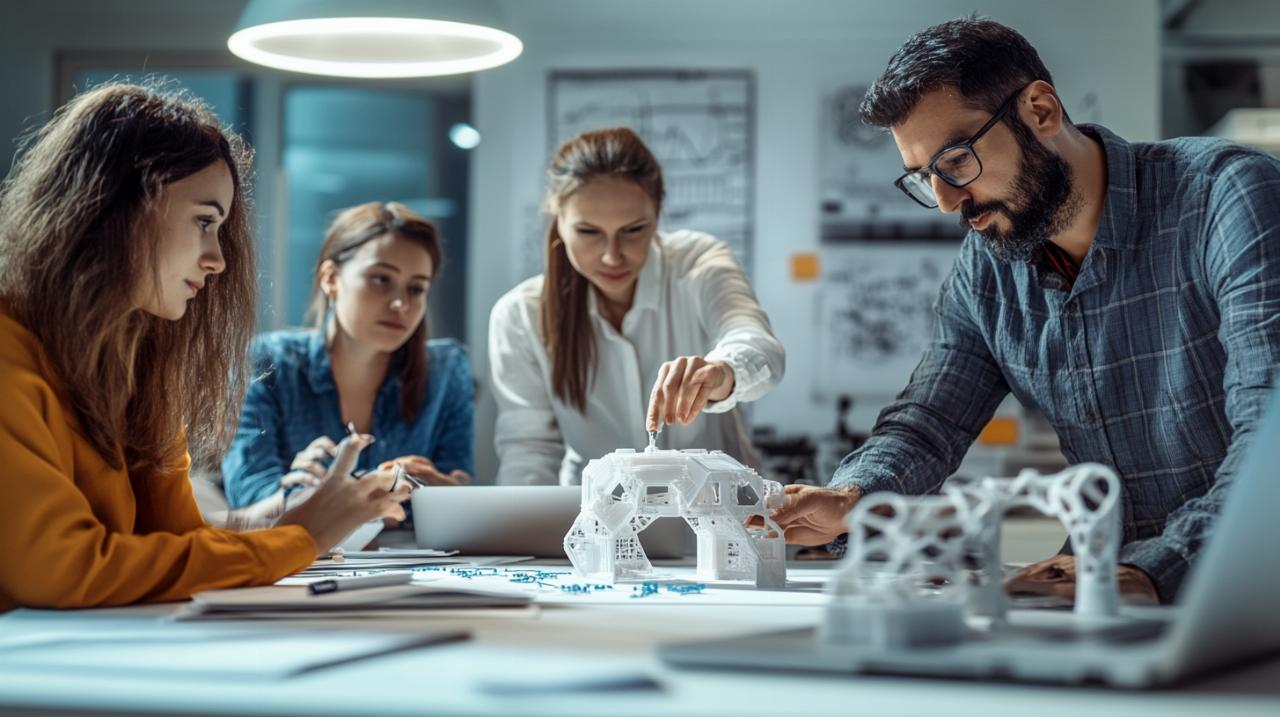
Leveraging additive manufacturing for rapid prototyping
Additive manufacturing, commonly known as 3D printing, has transformed the landscape of prototype creation. This technique builds objects layer by layer from digital files, allowing designers to produce complex geometries and intricate details that would be challenging or impossible to achieve through traditional methods. One of the greatest advantages of 3D printing is its speed. A prototype that might have taken weeks to fabricate using conventional techniques can now be produced in a matter of hours or days. This rapid turnaround enables teams to test multiple design variations quickly, accelerating the overall development timeline. Additionally, 3D printing supports a wide range of materials, from plastics and resins to metals and composites, giving designers the flexibility to experiment with different properties and finishes. The cost-effectiveness of this method also means that even small teams or startups can afford to create functional prototypes, democratising access to advanced product development tools.
Precision engineering through cnc machining methods
Whilst 3D printing excels in speed and versatility, CNC machining offers unparalleled precision and material strength, making it an ideal choice for prototypes that must withstand rigorous testing or closely mimic the final product. Computer numerical control machining involves the use of automated tools to cut, drill, and shape materials according to precise digital specifications. This subtractive manufacturing process removes material from a solid block, resulting in parts with tight tolerances and superior surface finishes. CNC machining is particularly valuable when working with metals, hardwoods, or other robust materials that may be unsuitable for additive techniques. It also allows for the creation of functional prototypes that can be subjected to real-world stress tests, providing critical data on durability and performance. By combining CNC machining with 3D printing, teams can leverage the strengths of both methods, using additive techniques for rapid concept testing and CNC for final validation and refinement.
Testing, User Feedback, and Iterative Refinement of Your Design
Creating a prototype is only the beginning. The true value of this tangible model emerges during the testing phase, where it is scrutinised, evaluated, and refined based on both technical performance and user feedback. This iterative process is essential for ensuring that the final product not only functions as intended but also delivers a positive and intuitive user experience.
Gathering valuable user opinions during prototype testing
User feedback is one of the most powerful tools available to product developers. By placing a prototype in the hands of real users, teams can observe how people interact with the design, identify areas of confusion or frustration, and uncover unexpected use cases. This direct engagement provides insights that internal testing alone cannot reveal, as it exposes the product to a diverse range of perspectives and behaviours. User opinions can highlight issues with ergonomics, usability, or accessibility that may not have been apparent during the design phase. Furthermore, feedback sessions often reveal opportunities for enhancement, as users suggest features or modifications that could improve the overall experience. By actively listening to these voices and incorporating their suggestions, teams can create products that truly resonate with their target audience and stand out in a competitive market.
Refining functionality and user experience through multiple iterations
Iteration is the cornerstone of effective prototyping. Rarely does a first prototype emerge as the perfect solution. Instead, it serves as a starting point for a series of refinements, each iteration bringing the design closer to its ideal form. After gathering feedback and conducting tests, teams analyse the results, identify weaknesses, and brainstorm potential improvements. These insights inform the next version of the prototype, which is then subjected to another round of testing and evaluation. This cycle continues until the design meets all functional requirements and user expectations. Throughout this process, it is important to remain flexible and open to change, as rigid adherence to an initial vision can prevent teams from discovering superior solutions. By embracing iteration and viewing each prototype as a learning opportunity, developers can achieve a level of refinement and excellence that sets their products apart. The final outcome benefits from this thorough and thoughtful approach, resulting in a product that is not only functional and innovative but also delightful to use.